

Back to Blogs
Why Late Payments and Invoice Backlogs Keep Growing in Businesses
Late payments and invoice delays slow your business. Learn why it happens and how Transmac helps fix financial workflow issues.
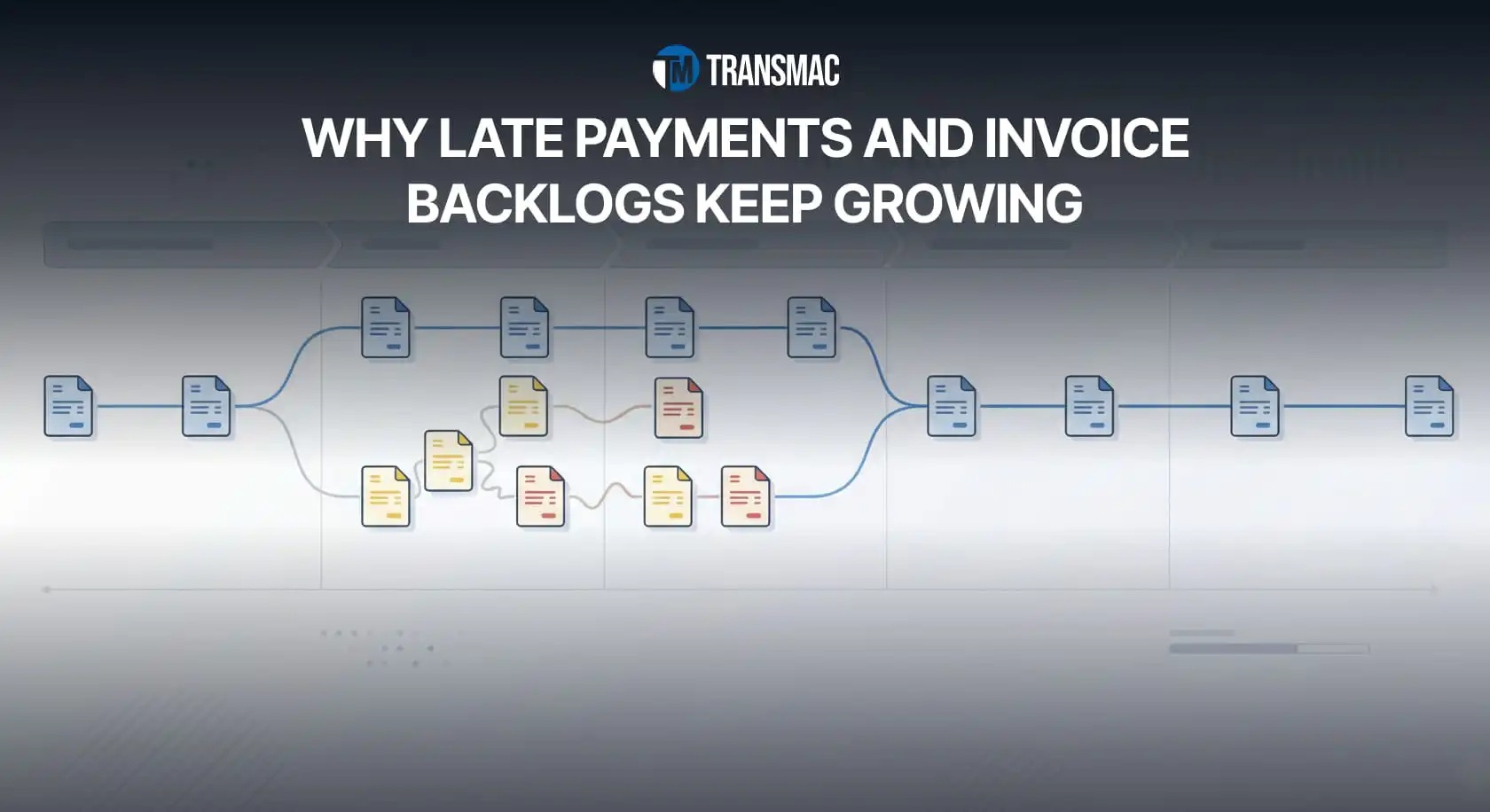
Late payments and invoice delays slow your business. Learn why it happens and how Transmac helps fix financial workflow issues.




We are ready to help you, save your time, and scale your business
Contact UsLate payments rarely happen for one clear reason. Most businesses assume it’s a client issue. Someone didn’t pay on time. A reminder wasn’t sent. Cash flow is tight. But when late payments become consistent, the problem is usually internal.
Invoices are delayed. Approvals take too long. Data is incomplete. And by the time everything is ready, the payment cycle has already shifted. This is how invoice backlogs start. And once they build up, they don’t go away on their own.
Late payments don’t begin at the payment stage. They begin much earlier.
An invoice is created late → It sits in a draft state → It gets sent days after the work is completed.
From that moment, the delay has already started.
Then, the client receives it later than expected. Approval cycles shift. Payment timelines move. What looks like a “late payment” is often a delayed process.
Invoice backlogs are not caused by volume alone. They come from inconsistency.
Common patterns include:
Invoices being issued several days after completion
Missing or incorrect data requiring revisions
Approvals depending on specific individuals
Invoices stored across different systems
Finance teams processing invoices in batches
At first, this creates small delays. Over time, it creates accumulation.
Most invoice workflows are not structured. They evolve. New clients, new formats, new tools. Each addition introduces variation.
Eventually:
There is no clear process
Responsibilities are not defined
Data flows differently every time
At that point, even simple invoices take longer to process. And delays become normal.
Late payments are not just a timing issue. They affect the entire business.
They create:
Unstable cash flow
Difficulty planning expenses
Increased time spent on follow-ups
Strained supplier or client relationships
Unreliable financial reporting
What seems like a small delay becomes an operational problem.
When invoice and payment workflows are structured properly, delays reduce significantly.
Invoices are issued on time. Data is complete from the start. Approvals follow a defined path.
This leads to:
Predictable payment cycles
Fewer overdue invoices
Improved cash flow visibility
Reduced need for manual follow-ups
The biggest shift is not speed. It’s consistency.
Automation can help reduce delays, but only if the process is already structured.
It can:
Generate invoices faster
Send reminders automatically
Track payment status
But it cannot fix missing data or unclear workflows. Without structure, automation simply moves the problem faster.
For many businesses, late payments are a result of inconsistent workflows rather than client behavior.
This is where Transmac supports operations.
By maintaining structured invoice and accounting workflows, Transmac helps ensure:
Invoices are issued consistently and on time
Financial data is complete and accurate
Workflows are aligned across teams
Delays caused by internal gaps are reduced
For companies operating across markets like the UK and Belgium, this consistency becomes even more important due to different requirements and timelines.
Late payments are rarely just about clients paying late. They are often the result of internal delays that start much earlier in the process. When invoice workflows are inconsistent, backlogs build, payment cycles shift, and financial visibility decreases.
Fixing late payments is not about chasing invoices. It’s about fixing the process behind them.